


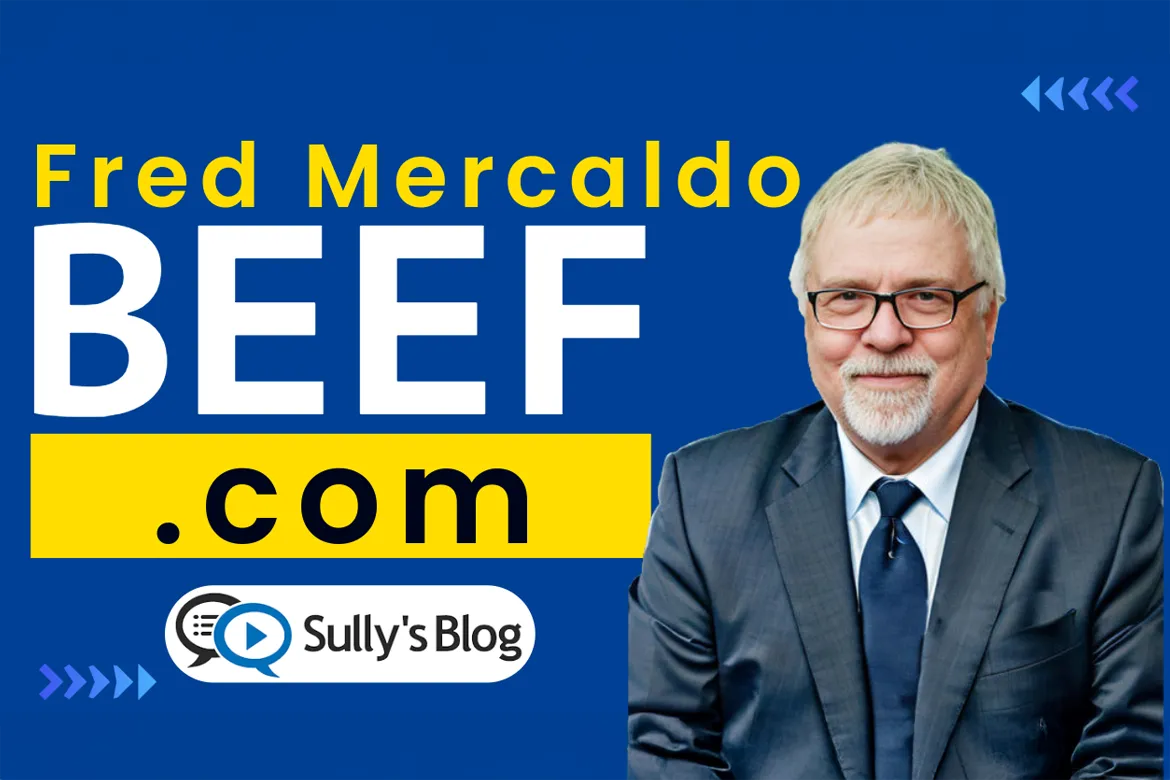
Fred Mercaldo is one of those names that carries real weight in domaining, particularly for anyone who has spent time around premium city .coms and long-term digital real estate. Long before “digital real estate” became a buzz phrase, Fred was already acquiring, building, and operating domains as real businesses, not just assets to park or flip. His work with flagship properties like Scottsdale.com helped define what serious development-first geodomaining could look like.
More recently, Fred added another major chapter to that story with the sale of Beef.com, the largest domain transaction of his career and one that sent a strong signal about the enduring value of premium, category-defining .coms. While the terms of the deal remain under strict NDA, the impact of the sale itself speaks volumes. It was not just a personal milestone, but a meaningful moment for the premium domain industry as a whole, reinforcing that scarcity, clarity, and category ownership still matter at the highest levels.
What makes Fred especially interesting is that he has lived multiple sides of this industry. He is not just a domain owner, but a developer, strategist, and broker who understands how media, branding, cities, and generics intersect in the real world. His perspective has been shaped by cycles, mistakes, wins, and evolution. That long view makes his insight particularly valuable at a time when many domain investors are reassessing what long-term success in this business actually looks like.
Mike: What first drew you into domain investing, and how did your journey begin?
Fred: I came into domain investing from a very practical, entrepreneurial angle rather than from speculation. In the early 2000’s, I was building real businesses online and quickly realized that the domain name itself often determined how much success I had. When customers instinctively trusted a name, conversions were easier, partnerships came faster, and marketing costs dropped. I’ve always considered myself a “brand name” guy; I always wanted to “stack the deck” in my favor to make revenue generation easier. Ironically, in 1996 the first domain name I developed was Desert-Golf.com. Yes….with a hyphen! It wasn’t until I acquired Scottsdale.com did things get serious.
Mike: Can you share the story of how you came to acquire Scottsdale.com and what made you see its potential at that time?
Fred: Luxury real estate, golf, tourism, dining, health, and lifestyle all are part of where I live: Scottsdale. I contacted the owner of Scottsdale.com and offered him $1,000 per month to become the Official Golf Partner of Scottsdale.com. I owned a company with 75 employees that generated 500,000 tee times annually, along with another $8M in golf package vacations, covering both lodging and preferred tee times at all the top courses. My team created a 52 page Golf Guide that was downloadable, with printable score cards and more. Being an avid golfer and someone who routinely travelled with friends for golf vacations, we knew what to do.
Our sales and closing ratios greatly were improved from Scottsdale.com leads and inquiries.
At the time, very few people were thinking about cities as digital platforms rather than static websites. I saw Scottsdale.com not as a brochure, but as the digital front door to an entire local economy. The long-term potential was obvious: real estate leads, travel and hospitality, local commerce, events, and partnerships—all anchored by a name that was the official digital billboard for Scottsdale.
Mike: How did your previous entrepreneurial experiences, like your golf vacation business, shape the way you approach domaining?
Fred: I’m not sure I ever considered myself a domainer, but I guess I am! To me, it was always whether or not a domain name could power an actual business, and generate revenue.
Mike: What is it about geographic domain names that appeals to you compared to other types of domains?
Fred: Well, I loved the fact that pure City .com names had so much credibility and authority, and something else that rarely gets discussed: direct type-in organic traffic. Our revenue for many years was in the upper 2-3% of developed City sites; our traffic was exceptional….and we never paid a penny for PPC or sponsored links or placement on Google. We viewed a city name as inherently resilient—largely insulated from Google’s algorithm changes and short-term SEO fluctuations—because its value is rooted in brand authority, direct recognition, and real-world relevance rather than search tactics alone.
My world began to be heavily involved in City domains; my membership, Board Member participation, and ultimate President roles at 2 major trade associations brought me in touch with 300+ City owners from around the world, with the majority of these trusted relationships remaining intact now in 2026.
Mike: In your view, how has the geodomain market changed since you first started?
Fred: We still are in a transition period from entrepreneurs owning these valuable brands into major media and corporations with massive resources stepping up and owning these for the coming generations. The newspaper print industry really missed the opportunity to acquire these names over the past 2 decades. They didn’t get it. They believed all they needed to do was register their paper name as a .com, and they would succeed. They could not have been more wrong. Major reason why? While being hyper local is important, so are opportunities from visitors from outside the city and state; vacations, hotel bookings, real estate relocations, restaurants and so much more valuable traffic that can be monetized at the highest levels are missed because visitors have no idea who the local paper is. Case in point: Scottsdale.com versus AZCentral.com. I spoke at a conference with 300 people in San Francisco and asked everyone if anyone heard of AZCentral.com. Not one hand raised. Who are they? The local Gannett Arizona Republic newspaper digital brand.
We have seen major success in certain markets. The Vivid Seats acquisition of Vegas.com for $240M is one. Another is Boston.com, who generates close to $400M annually digitally alone; the Boston Globe newspaper generates another $500M+ in revenue, but what Boston.com has done is extremely impressive, and proved the business model. I am part of an investment group and development organization developing NewYork.com at this very moment. So, City development has evolved from entrepreneurs to major companies, and we will see this more and more in the near future.
Mike: What makes a city .com domain truly valuable, beyond just traffic, and how do you develop it into a thriving business?
Fred: Traffic is only one aspect, as traffic can be monetized at high levels. The real value comes from trust, authority, and market positioning. All of the traditional monetization partnerships exist today, with strong demand from companies that desire to be featured in the real estate, restaurant, legal, local business, hotel and vacation packages along with sponsored content and much more. Social media is now playing a major role in brand awareness and traffic sourcing. Being a transactional monetization platform is also important. With New York approving 3 new mega-casino projects, NewYork.com will soon become the #1 source for all casino booking packages in the New York market, along with Broadway tickets, tickets to 7 professional sports teams and much more….similar to Vegas.com.
Mike: How important is branding vs. SEO vs. direct type-in traffic for a geodomain?
Fred: I touched on this earlier, but at the highest level, the domain name itself is the foundation. Branding comes first, because it establishes trust and authority before a user ever sees a search result. With AI now reshaping how people search and how answers are delivered, platforms increasingly prioritize credibility over tactics. AI systems want to surface the most accurate, authoritative source, and that naturally favors trusted, exact-match brands like NewYork.com. SEO and direct type-in traffic still matter, but they are amplifiers. The name—the brand—is what makes everything else work.
Mike: How has AI and new technology changed the way you do domain research, marketing, and brokerage?
Fred: The tools available to me today versus 3 years ago is a major game changer. For my main business, domain brokerage, whether it is for Beef.com, IVF.com, TheMiddleEast.com, SanDiego.com and 50+++ other brands, AI can immediately research and tell me who the likely Buyers are. Tools like Apollo.io and RocketReach.co are able to quickly provide C-Suite verified emails for me, and I craft all of the outreach messages, that then get enhanced and improved by AI. Canva and other platforms help with graphics, and quite frankly, I can accomplish in one hour what it would have taken me 8 hours 3 years ago. I start early; usually by 6:00 AM, and my goal is to reach in some manner a minimum of 300 contacts by 9:00 AM offering either my clients names or names that I own or am partnered with….with quality, insightful and compelling messaging….and I usually exceed this production. While I am very active in marketing on LinkedIn and X, it represents only the tip of the iceberg of my true outreach.
Mike: Beef.com is one of those rare, category-defining domains. From your perspective, what characteristics made it the kind of asset that attracts serious, long-term buyers?
Fred:
What makes Beef.com so compelling to serious buyers is that it sits at the center of an industry facing enormous structural challenges and transformation. I did not know what I was getting into for the first couple weeks; I just knew the market size was enormous, and I had developed a friendship with the owner since 2014.
The global beef industry is dealing with pressure from every direction—consolidation among the Big Four processors, margin compression at the rancher level, political and regulatory scrutiny, supply-chain fragility, export and import dynamics, sustainability concerns, animal health, and growing consumer demand for transparency and trust.
In an environment like that, control of the category name matters.
Beef.com isn’t a marketing site or a niche brand—it’s the authoritative digital front door to the entire industry. It’s neutral, instantly credible, and broad enough to support ranchers, processors, policymakers, exporters, health and nutrition voices, and consumers on a single platform.
The obvious Buyers, which included the Big Four processors, fast food giants, US Cattle Rancher Associations, Direct to Consumers leaders for their Ranch-to-Table subscriptions, and nations that desire to expand their beef exports were all in play; we even had communications directly with the USDA to make Beef.com a US owned asset to support US cattle ranchers….and with my many contacts in the Middle East, we were close with a sovereign fund there, as presently the region imports 85% of their beef and they really need to establish their own ranches to stabilize their food supply.
So I entered a massive marketplace with many qualified buyers.
Mike: How did the Beef.com transaction differ from past deals you’ve been involved in, either as an owner or a broker, in terms of complexity or buyer profile?
Fred:
This transaction was fundamentally different from most others I’ve been involved in because the buyer profile and the underlying vision went far beyond a traditional acquisition. Beef.com wasn’t purchased as a marketing asset or a short-term revenue play—it was acquired as an industry platform with generational implications.
What makes this deal unique is the depth of domain expertise on the buyer side. As Beef.com is developed, the industry will see just how thoughtful and ambitious the plan is. Texas Slim and his team bring rare, firsthand knowledge of the beef ecosystem—ranchers, supply chains, policy pressures, and consumer trust—combined with a sophisticated understanding of technology and AI. That combination is exceptionally uncommon.
Equally important is the long-term mindset. This isn’t about quick monetization; it’s about strengthening an industry, supporting cattle ranchers, improving transparency, and contributing to the health of future generations through better food systems. From my perspective, that level of alignment between asset, buyer, and mission is what made this transaction stand apart. All I can say is: watch what happens next.
Mike: What do you think the Beef.com sale signals about buyer demand for category-defining .coms in today’s market?
Fred: I think the Beef.com sale is another important data point confirming that demand for true category-defining .coms is very real—especially among serious, obvious buyers—even when pricing remains confidential. Assets like this don’t trade on impulse. They require understanding, and an actionable game plan.
What this sale underscores is that buyers of top-tier domains aren’t just acquiring a name; they’re underwriting a business strategy. They need a clear development roadmap, a defensible ROI story for internal stakeholders or shareholders, and confidence that the asset will compound in value over time. That diligence takes time.
Even in 2026, there’s still a wide difference of opinion on how premium digital assets should be priced, which is precisely why the most meaningful transactions often take years to come together. Against that backdrop, closing Beef.com in roughly 16 months speaks to both the quality of the asset and the preparedness of the buyer. It signals that when vision, economics, and category authority align, the market is very much there.
.
Mike: Is there anything about the Beef.com sale that you can share that surprised you, even after decades in this industry?
Fred: I’ve spent most of my career operating in the super-premium space, so working with upper-echelon brands and pricing was comfortable for me. I understand how rare assets behave at that level. What truly surprised me in the Beef.com transaction wasn’t the caliber of interest or the valuation dynamics—it was the depth and complexity of the global beef industry itself.
As the process unfolded, it became increasingly clear just how many unresolved issues the industry is grappling with: pressure on independent ranchers, consolidation among processors, regulatory and political forces, supply-chain fragility, export and import tensions, food security, transparency, and long-term public health concerns. The number of stakeholders—and the urgency of their needs—was eye-opening.
That realization reframed the transaction for me. Beef.com wasn’t just a super-premium digital asset changing hands; it was a platform that needed to land with the right steward. In that sense, the most important outcome wasn’t the sale itself, but that the ultimate buyer was the right buyer—one with the credibility, technical capability, and long-term vision to address those challenges in a meaningful way. That alignment is rare, and it’s what made this deal especially satisfying. Now, I’m ready for the next one!!!!!
Mike: What advice would you give to entrepreneurs considering building a business on a city or regional domain?
Fred: You need to do it right, which requires significant investment, time and resources. You do not have to reinvent the wheel, just execute at the highest level with quality content, partnerships and technology….with a strong emphasis on social media. If done right, you just may have an exceptional exit to a larger media company….but basically, multiply the time you believe it will take to profitability, along with the investment you project to get to profitability….and multiply them by 3! But building a major City will be exciting, rewarding and you have have a massive amount of fun along the way!