



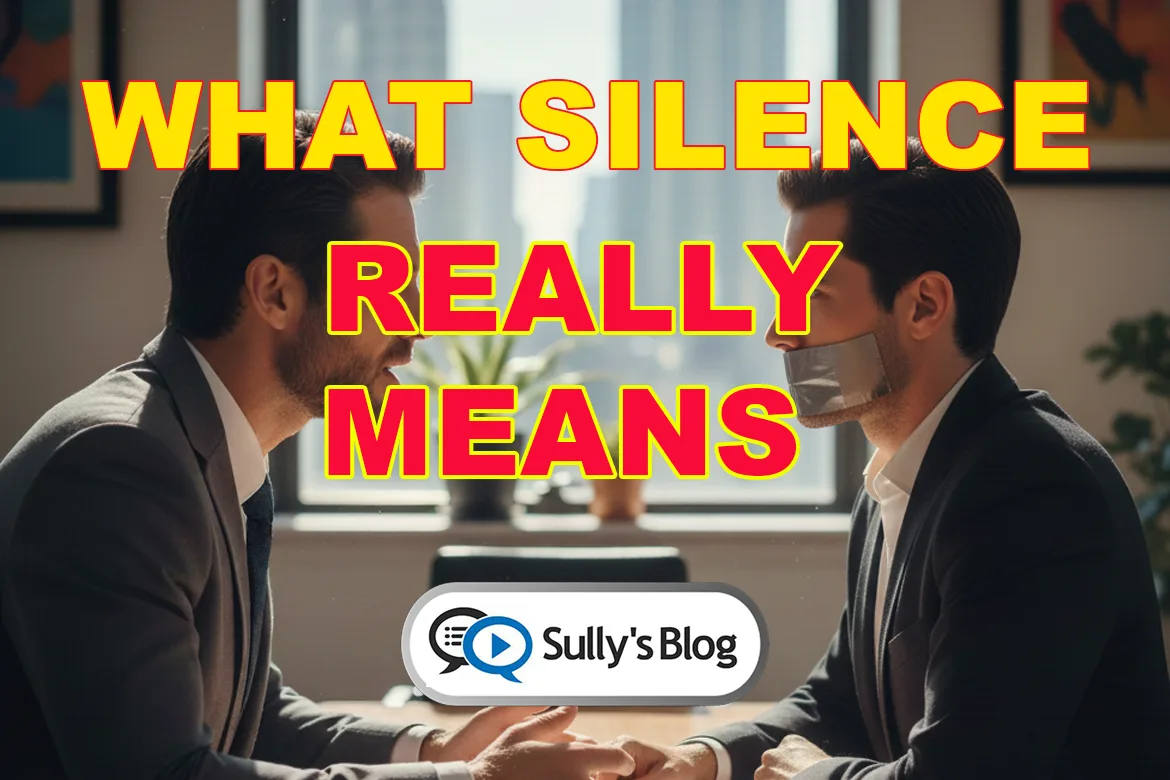
Silence makes people uncomfortable. In domain negotiations, that discomfort often causes sellers to talk themselves out of leverage.
After enough years doing this, you stop treating silence as a problem to solve. You start treating it as information.
When a buyer goes quiet, most domain investors assume something went wrong. The offer was too high. The timing was bad. The buyer lost interest. So they follow up too quickly. They lower the price. They justify the value. They try to restart momentum that may not have been lost at all.
Silence rarely means no.
More often, it means the buyer is thinking.
Serious buyers do not respond the way casual buyers do. They do not fire back instant replies. They are usually juggling internal conversations, budgets, partners, and timing. The domain is one line item in a longer list of decisions. When the price is meaningful, the response time slows down.
That pause is not rejection. It is processing.
I have seen more domain deals die from sellers filling silence than from buyers walking away.
When you receive an offer and respond with your price, you have done your job. The ball is in their court. Silence at that point means the buyer is recalibrating. They are deciding whether the domain fits the problem they are trying to solve. They are weighing cost against regret. They are testing how badly they want it.
Your job during that silence is to do nothing.
That is harder than it sounds.
Most domain investors want to be helpful. They want to explain why the name is strong. They want to provide comps. They want to justify the price. But justification is often a signal of insecurity. It tells the buyer you are more motivated than you should be.
Silence from a buyer can also mean they are waiting to see if you blink.
Buyers understand psychology, even if they do not call it that. They know many sellers will follow up with a discount or a softer position if enough time passes. They wait because waiting costs them nothing. Every day you fill that silence with explanation or price movement, you teach them patience pays.
There is another kind of silence that matters.
When a buyer goes quiet after making an offer, it often means they have reached their comfort ceiling. They want the domain, but they are hoping time will move you closer to their number. If you hold steady, one of two things happens. They either come back with a better offer, or they disappear entirely. Both outcomes give you clarity.
Clarity is valuable.
A disappearing buyer after silence was not a buyer you were closing anyway. A buyer who comes back after silence is showing you intent. They have thought about it. They have weighed alternatives. They are still in the conversation.
That is the buyer you want.
The mistake many sellers make is treating silence as something to overcome. In reality, silence is part of the negotiation. It is a pressure point. Whoever feels it less has the advantage.
This does not mean you never follow up. It means you follow up with intention, not anxiety.
A short, neutral check in after a reasonable amount of time is fine. Something that reopens the door without changing the terms. No discounts. No essays. No urgency. Just a reminder that the opportunity still exists.
The longer you do this, the more you realize that strong domains do not need constant defense. If the buyer truly needs the name, silence will not stop them. If they do not, nothing you say will manufacture that need.
Silence is not the enemy. It is a signal.
Learning to read it, and more importantly, learning to sit with it, is one of the quiet skills that separates experienced domain investors from everyone else.
If you want to really learn more about negotiating and how to get the most money from your efforts, check out STOP LEAVING MONEY ON THE TABLE: Exact Scripts, Psychology, and Closing Tactics That Add $2,000–$5,000 to Every Domain Sale