



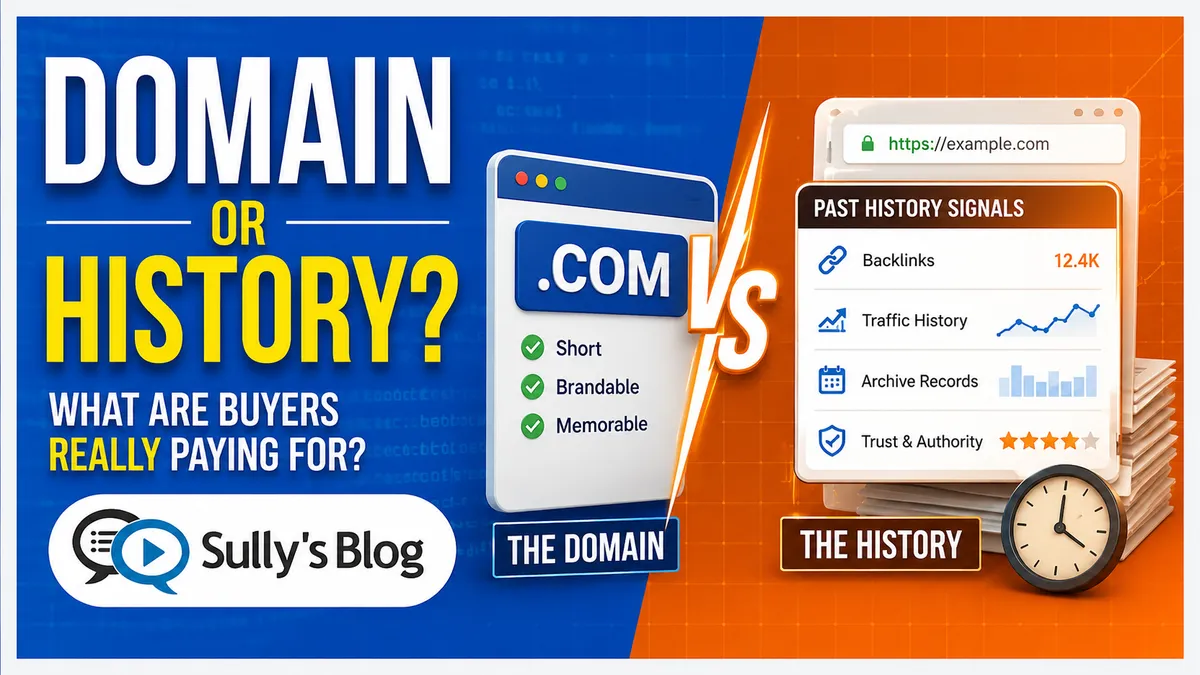
Most of us are trained to look at the name before anything else. Is it short, is it a .com, can people spell it, does it describe something somebody actually sells, is there a pool of buyers who'd want it. Those are the right questions most of the time and I'm not knocking them.
But expired domains with backlinks drag in a question the name alone can't answer, which is what already happened on this thing before it ever landed in your account.
That one question can swing the whole number. A domain that looks like nothing on the surface might have a past that makes some SEO or affiliate guy or local business sit up, and a domain that looks fine on paper can be dead weight if the history's gone bad. That's the part of this market I find interesting. Half the time the buyer isn't really paying for the domain at all, he's paying for whatever's still clinging to it.
When a real site lived there once, a business or a publication or a school or some little nonprofit, it tends to pick up links along the way. News pieces, resource pages, a university directory, old partners, blogs that linked out back when blogs linked out. And a chunk of those links are still sitting there years after the original site went dark, pointing at nothing.
To the right buyer that's the whole prize.
A fresh reg starts at zero. No links, no mentions, no trust, nobody's heard of it. An expired name with a clean past walks in already carrying signals that took somebody years to earn. None of that guarantees it ranks, the old value doesn't transfer clean, and Google isn't getting fooled by everything you throw at it. But there's a chance something's there that has nothing to do with how the name reads.
Which is why you can't grade these like a normal domain. A regular buyer is sitting there wondering if it'd make a decent brand. The SEO buyer doesn't care about that, he wants to know who linked to it and why and whether any of that still counts. Two completely different conversations about the same eight letters.
The ones actually worth buying tend to share a few things. There was a real site. The topic was something you can point at. The links came in naturally instead of getting stuffed in. The anchor text doesn't read like spam. The domain never did time as a casino or a pill site or some hacked mess in a language nobody on the deal speaks. And the old use still lines up with whatever you'd plausibly build there next.
That last bit matters more than people give it credit for. Old gardening blog, somebody puts up a new gardening site, fine, that tracks. Old gardening blog turns into a payday loan affiliate overnight and now you're in the territory Google's been pretty loud about, the buy-an-expired-name-just-to-game-rankings move that they've made clear they're watching for.
So the value was never just "it has backlinks." It's relevant clean links that still make sense with where you're taking the thing. That's a much smaller pile than the backlink counts make it look.
There are a ton of expired names that show a fat link number at first glance, and then you actually dig and it's junk directories, scraped pages, comment spam from 2014, sitewide footer links, pages that 404 now. A big number on its own isn't a green light. Sometimes it's the opposite, a flag that somebody already ran this domain into the ground.
This is exactly where newer guys get cooked. They pull up one tool, see a high authority score, and treat it like an appraisal. Those scores are a screening guess, not a verdict. You still have to go look at the real links, read the anchor text, walk the Wayback history, check if it's even indexed, see if the topic wandered all over the place, and figure out whether the name's worth anything standing on its own if the SEO juice turns out to be nothing.
That last one's the test I keep coming back to. Would I still want this domain if the backlinks did exactly zero for me. If the answer's no, I'd better be dead certain about the history, because the history is the entire bet. If it's yes, then the links are gravy and I'm not exposed if they evaporate.
People put these to work a few different ways. Some rebuild close to the old site. Some point it at a project they're already running. Some use it as the bones of an affiliate or content play. And some just buy it because old links still kick a trickle of type-in and referral traffic their way every month without anyone doing a thing.
That's how a plain-looking name still moves. The buyer doesn't need it to be premium in the way we usually mean. He needs that one university page or trade rag or local paper to still be linking, and he's paying for that, not the string.
Which is the practical reminder in all of it for me. The value isn't always in the name. Sometimes it's in what the thing used to be, or in old connections scattered across the web, or in trust some stranger earned years back and walked away from when the renewal came due.
It's a jumpy market though. Links rot. Search engines decide to quit caring about old signals. A name that looked spotless can turn on you the deeper you go. And if the only plan is dumping thin content on an old domain and praying the links carry it, that's not a plan, that's a hope.
These things aren't magic and they aren't a shortcut that works every time. They're assets you have to actually check out before you wire money. The opportunity's real, I just don't trust anybody, myself included, who buys one without asking what it's already been through.