



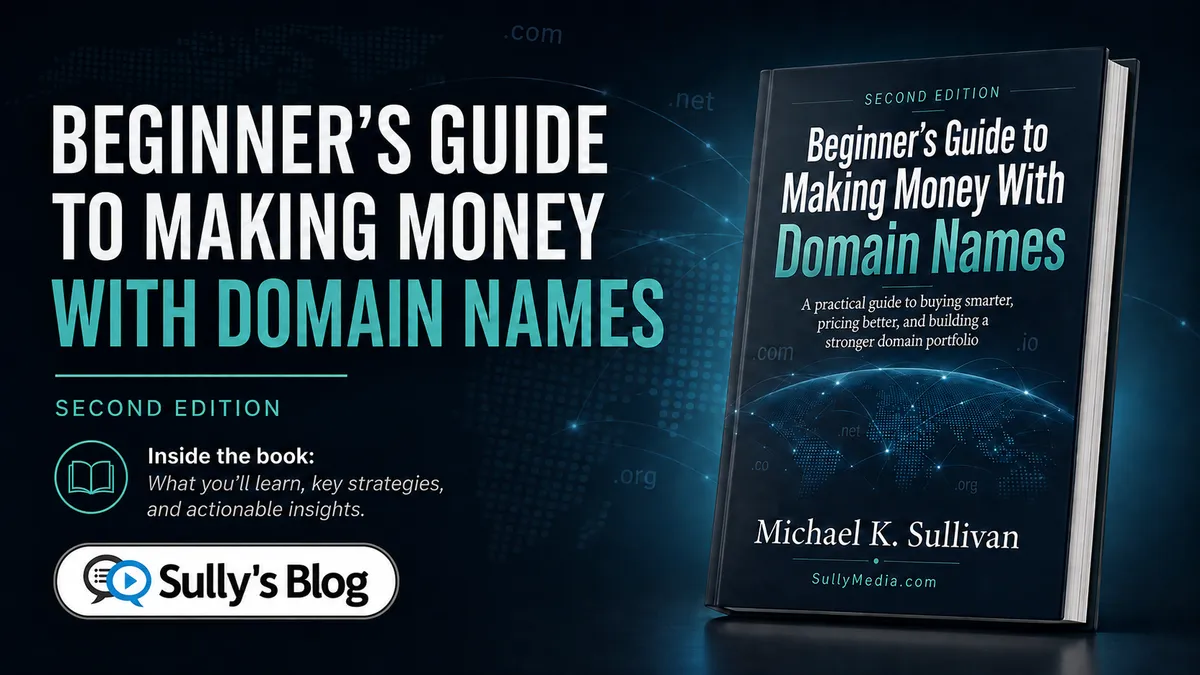
When I put out the first edition of Beginner's Guide to Making Money With Domain Names, I had one goal. Give new investors the introduction I wish somebody had handed me when I started.
Domain investing looks easy from the outside. Register a name, wait for the phone to ring, cash a check. That's the version people see.
What they don't see is everything underneath it. The bad registrations. The names you let expire a month before someone would've paid real money for them. The negotiations you lost because you flinched first. All the small mistakes that quietly add up to a lot of wasted renewal fees.
The first edition was my attempt to shortcut that learning curve for someone else. A lot has changed since then, and honestly, so have I.
The industry's moved. Marketplaces look different than they did. Landing pages have changed. Buyers are sharper now, more informed, less likely to overpay just because you told them to. AI has worked its way into nearly every part of the process, from brainstorming names to building out a site to handling outbound. New extensions have found their footing, and .com just keeps proving why it never really lost its.
I've bought more domains since then too, sold more, interviewed more investors, watched trends come and go and come back around wearing a different name. Made plenty of new mistakes to write about. A few minor updates weren't going to cut it. So I rewrote it.
The second edition is substantially bigger, reorganized, and rebuilt for someone walking into this business today. It still covers the fundamentals. How registration actually works, where to buy, how transfers happen, what a sale looks like start to finish. If you're brand new, that stuff still matters. But this edition spends a lot more time on the decisions that actually decide whether you make money.
Start with picking domains in the first place. The biggest mistake I still see new investors make is assuming a name has value just because it was sitting there available to register. It wasn't taken for a reason, sure, but availability isn't demand. I go deeper this time into what actually makes a name attractive, keywords, length, extension, how it sounds out loud, whether it's easy to spell after hearing it once, whether there's a real commercial use case and a realistic pool of buyers who'd want it. I cover the common shorthand too, CVC and VC patterns, numeric domains, the cultural quirks that move demand in ways a spreadsheet won't show you.
And then there's the part that never fits neatly into a formula: why some names just feel premium and others don't. You can check every box on paper and still end up with something that sounds off. Or you can land on a name that breaks half your usual rules and still feels credible the second you hear it. Domain quality isn't only a metrics problem. A lot of it is perception, and perception doesn't care about your checklist.
There's no price list for a domain name, and there never will be. Two names that look nearly identical on paper can sell for wildly different numbers depending on timing, who's buying, what industry they're in, and how well the seller holds the line. I dig into comparable sales, end-user potential, wholesale versus retail thinking, search demand, extension strength, replacement cost, realistic buyer pools. I also explain why automated appraisal tools are fine as one data point and dangerous as an answer. A number some algorithm spit out doesn't make a domain worth that number. The only question that matters is whether a believable buyer exists who'd actually benefit from owning it.
Anybody can build a big portfolio. A weekend, a credit card, and a list of ideas is all it takes. Building a good one is a different skill entirely. A handful of casual registrations turns into hundreds, then thousands, in annual carrying costs before you've noticed it happening, and most investors don't feel that weight until the first big renewal batch lands in their inbox. I know, because I've paid a few of those bills myself and winced every time. So I get into portfolio discipline. How much to actually invest, tracking what you paid, reviewing what's working, setting a bar for what earns another year of funding, and being willing to cut a name loose when it hasn't. I also talk about giving a name one last shot before you let it expire, something I've thought about a lot more since building NotRenewing.com, though the book isn't a pitch for the marketplace. Every name in your portfolio should have to earn its spot.
A good name still has to turn into money, and that's where selling and negotiating come in. I expanded the sections on landing pages, marketplace listings, fixed pricing versus make-offer, inbound versus outbound, payment processing, transfers, and negotiation itself. Should you publish a price? Usually, yeah. Should you hand over your lowest number the second someone asks? Almost never. How fast should you follow up, and when do you walk away instead of chasing a buyer who's already decided you're too eager? There's no script that works every time, but there are patterns, and knowing them keeps you from giving away leverage you didn't need to give away.
This still isn't a textbook, and I didn't want it to turn into one. It's built out of what domain investors actually run into. Throughout the book there are real examples from my own history. A few wins. More than a few names I registered for reasons that made sense at 11pm and stopped making sense by the next renewal cycle. Those mistakes teach more than the wins ever did. Years of conversations with other investors, brokers, founders, marketplace people, and attorneys through Sully's Blog worked their way into this edition too. You shouldn't copy anyone else's strategy wholesale. But watching how other people think through a deal will sharpen how you think through your own.
Sully's Blog readers have stuck with this site for a long time, some of you since the early days, some of you more recently, plenty of you already own the first edition. So the second edition is free for you. Use the code SULLY2ND at checkout and the price drops to zero, whether you grab it through Gumroad or the Sully's Blog store.
This book is really for two kinds of people. Someone brand new who wants to skip a few years of expensive trial and error, and someone who's been at this a while but has a sense their portfolio's gotten too big, too costly, or too unfocused to actually work for them anymore.
I'm not going to pretend domain investing is easy, because it isn't. No guaranteed sales, no valuation method that's right every time, no shortcut around patience and judgment. What I'm hoping for is simpler than that. That you make fewer of the mistakes I made.
That's what I wanted when I started out, and it's what I tried to put into this edition. Thanks for still reading. Now go make a few better calls with your names.