



A few years back I had a four-letter .com on my watch list. Decent name, nothing spectacular, but exactly the kind of thing I'd flip for a few hundred bucks. Expiration date came and went. I checked Whois like clockwork for about three weeks, convinced I was about to snipe it the second it opened up. I wasn't. I just didn't understand yet that "expired" and "available" are two completely different states, separated by a process I hadn't bothered to learn.
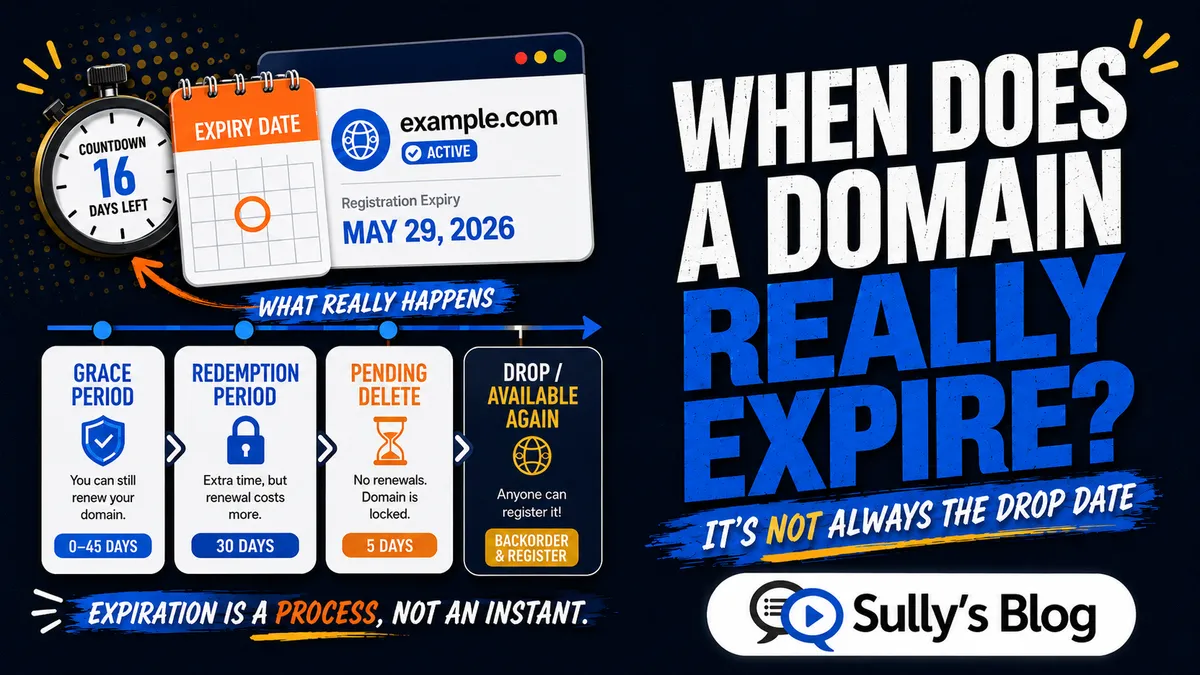
Here's the thing nobody tells you when you're new: the expiration date on a domain isn't a finish line. It's the starting gun for a process that can run 45, 60, sometimes 90 days depending on the extension.
First stop is the renewal grace period. The owner blew the renewal date but usually still gets a window to fix it, same price, or close to it. The site might still be up. It might be parked. It might show one of those ugly "this domain has expired" pages. Doesn't matter. The name isn't available. The old owner still has the wheel.
I saw a .com blow past its expiration date and started mentally spending money I didn't have yet. Wrong move. If it expired July 1, that doesn't mean you're registering it July 2. Some registrars will even run it through an expired auction while the old owner still technically has recovery rights. Owner renews, your auction bid means nothing. Annoying? Sure. But that's the deal.
Get Money for names you're letting expire - NotRenewing.com
All names sell at a flat $99. No auctions, no negotiations.
Miss that window and you're into redemption. This is where it stops being casual. The registry's usually already deleted the name on their end, and getting it back means a restore, not a renewal, and a restore costs real money. For most gTLDs you're looking at 30 days here. If the old owner wants it back badly enough, this is their last real shot, and they'll pay through the nose to take it.
After that: pending delete. Five days, give or take, and there's nothing anyone can do about it. Not the old owner, not the registrar on a whim. It's just... waiting. Then it releases.
And this is the part that trips people up more than anything else. Someone spots a name in pending delete and thinks the hard part's over. It's not. If the name has any value at all, there's a lineup. Drop catchers. Auction platforms. Registrar partners. Other investors running the same spreadsheet you are. "Available" and "gettable" are two different words, and conflating them has cost me a name or two over the years.
TLDs don't play by one rulebook either, which is its own trap. .com, .net, most of the familiar gTLDs run grace, redemption, pending delete, in that order. Country codes go their own way. Some skip redemption entirely. Some need renewal before the actual expiration date, which still catches me off guard sometimes. .UK runs on its own Nominet timeline and doesn't map cleanly onto what you know from .com. I wouldn't try to memorize every ccTLD's quirks. Just assume you don't know until you check.
Registrars add their own layer of chaos on top. GoDaddy's timeline isn't Namecheap's. Dynadot and Porkbun each run it a little differently: when the name stops resolving, when auction kicks in, when the account finally lets go of it. "It expired a month ago, it should be available" is a sentence that gets people burned constantly, because it skips over which registrar and which TLD and where exactly the name sits in that lifecycle.
The auction piece is honestly the part I find most interesting, and it took me a while to see why it makes so much sense from the registrar's side. They already have the relationship. They already know the expiration calendar before anyone else does. So why wait for a full drop when they can test the market first and pocket the upside if there's demand? It's close to free money for them. The customer already paid for the original registration. The registrar's just seeing if anyone else wants what's being abandoned. No renewal risk, no holding cost, none of the stuff domain investors deal with every day.
If nobody bites, no harm done. It just keeps moving through the pipeline toward deletion. That's why the expired-auction model works so well for registrars specifically. They get a free look at demand without carrying any of the downside.
What are they hunting for? Same stuff you and I look for, just at a scale we can't match. Short. Clean .coms. Recognizable keywords. Names with backlinks or type-in traffic already flowing. And honestly, existing bids are the loudest signal in the room. If people are already backordering it, the registrar doesn't need to guess.
None of this system was built with domain investors in mind, if I'm honest. It exists to give the original registrant every reasonable chance to come back for their name, and to give registries a predictable way to process the ones nobody's coming back for. We're just working the edges of somebody else's process.
So, expiration date isn't a drop date. Grace period isn't availability. Redemption isn't cheap, and by the time pending delete flips to "released," there's usually a longer line than you'd guess standing behind that name. I still catch myself forgetting this. Probably will again.