


We all tell ourselves the same story about who buys domains. Some company is stuck with a clunky name, gets tired of spelling it out on every sales call, finds your name, pays up. It's a clean story. It's easy to picture.
It's also about half the market.
Some of the better buyers I've dealt with weren't struggling with anything. Their site worked. Their email worked. Customers found them fine. They were sitting on something short and clean that most people would call a perfectly good domain, and they bought anyway.
That's the difference between replacement demand and upgrade demand, and most of us only ever build a list for the first one.
Replacement demand is the easy one to understand. A business is stuck on something long, or hyphenated, or spelled three different ways depending on who's typing it. Maybe the domain stopped matching the company name after a rebrand nobody finished. Your name fixes a problem they can describe out loud, which means you don't have to sell them on the concept before you sell them the name.
Side Note: There are good aftermarket names available for less than $100 if you know where to look. NotRenewing has new names listed every day. Find your next flip.
Dropbox is the version everybody knows., and I have written about this before. Quite recently. They ran on getdropbox.com for years while dropbox.com sat parked with ads on it, and the reporting at the time put that parked page at close to 60,000 unique visitors in a single month. All of it people who assumed they knew where the company lived. Dropbox bought the name in October 2009. The price never got confirmed publicly, which tells you plenty on its own.
Upgrade demand is harder. Harder to spot, harder to sell into, harder to be patient with.
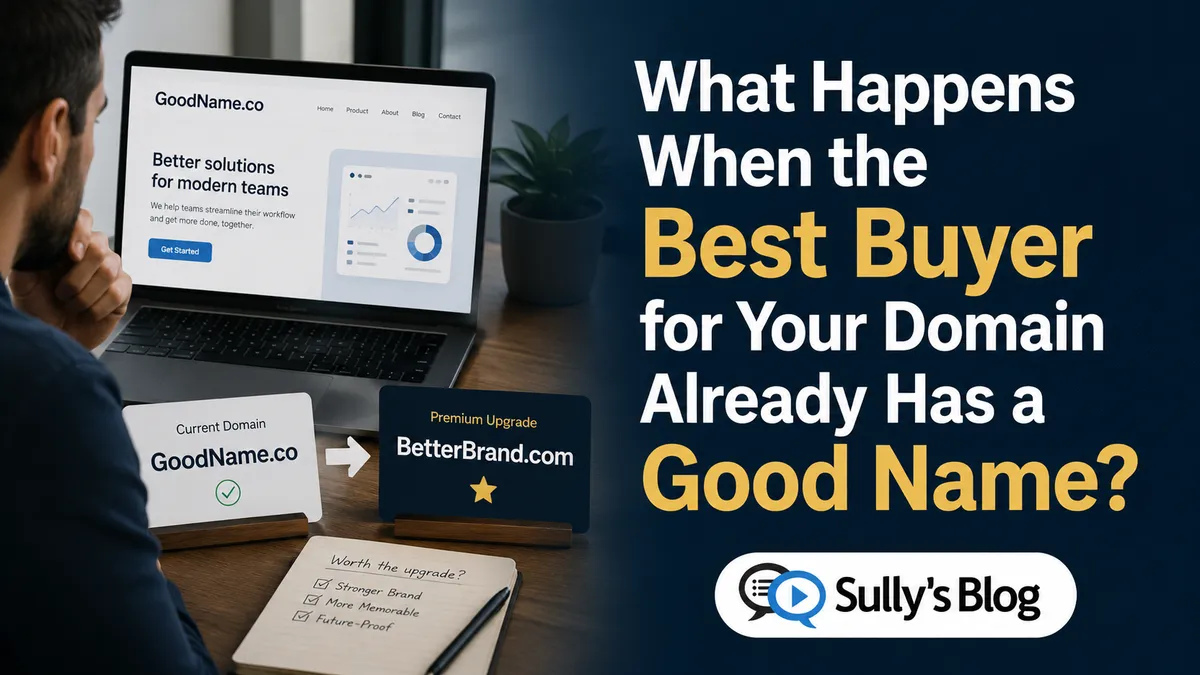
The company's already on a decent .io or .co or .ai, or a longer .com that reads fine. Nothing is broken. Your name just gives them something cleaner and easier to own ten years from now. There's no fire to point at, so most investors skip right past them and go back to hunting for hyphens.
I've come around to preferring those buyers. A company sitting on the second-choice version of your exact word has already told you something no spreadsheet will. They like the word. They built a business around it and spent real money teaching people to say it. Employees answer the phone with it. Investors put it in the deck.
Compare that to the way I built buyer lists for years, which was opening a browser and imagining who might theoretically want the name someday. That's not research. That's wishful thinking with a spreadsheet attached, and I ran a lot of outreach off lists like that before I admitted how little they were worth.
The catch is that upgrade demand runs on its own clock.
A company that launched eight months ago isn't spending serious money to improve a domain that already works. At that stage the money goes to a hire, or the product, or ads that actually bring in customers. You'll get a polite no. More often you'll get nothing.
Then the business changes. Revenue grows. A round closes. Somebody in marketing finally does the math on how many podcast listeners typed the wrong address. A competitor shows up on the extension everybody assumes is theirs.
Your domain didn't get better. The buyer did.
Notion is the cleanest recent example we've had. Back in 2018, Ivan Zhao asked Akshay Kothari, who had just joined, to figure out how to get notion.com. The company was small then and .so was working well enough. Bill Sweetman brokered it. The owner turned out to be a west coast entrepreneur and a serious Grateful Dead fan, so Notion's investor Ronny Conway arranged a private meeting with the band in New York on Halloween, fifteen minutes after the show. The offer was cash, plus equity, plus the band.
The owner skipped the meeting and took more equity instead. By Kothari's own math that equity was worth around $100,000 at the time and has since gone up more than tenfold. Notion moved the product over to notion.com this past June, roughly eight years after that first conversation.
Read that story from the seller's side for a second. He didn't take the biggest number on the table. He took the piece that would grow with them.
Now, not every company upgrades, and I don't want to oversell this. Plenty of good businesses stay on their alternate extension forever and never think about it again. Some look at the price and decide the money buys more somewhere else, and they're often right. Some have spent so many years building recognition around what they own that a switch feels like starting over, which is a real cost people in our business tend to wave off.
So upgrade demand isn't the same thing as demand.
The question worth answering before you get excited is whether the improvement is meaningful to them, not to you. Would it stop the mistyped traffic? Would it make the radio spot land? Would it keep somebody else from sitting on the obvious version of their own brand? Those are answerable. "They should own the .com" is not, and it has never once closed a deal for me.
So build the second list. The companies already using your exact word on something they settled for. Then check in about once a year and stay patient, because you're not waiting for the domain to get better.
You're waiting on them.