



When I look at an expired domain, I usually start with the name. Is it easy to remember? Can you say it out loud without spelling it? Could I picture a real company using it?
But sometimes the name is only half the story.
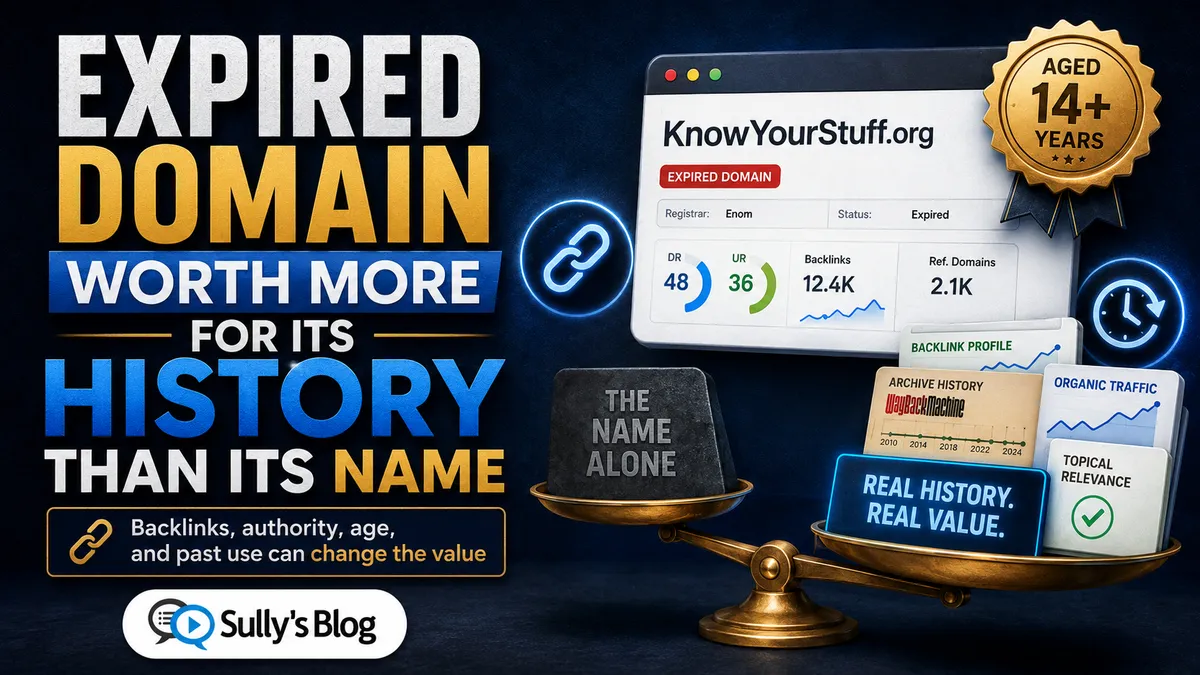
KnowYourStuff.org sold for $30,600 at NameJet in October 2019. That's a lot of money for a three-word .org. It's a decent name, but if it had never been developed, I doubt it would've pulled anywhere close to that.
The difference was the history.
The Insurance Information Institute used KnowYourStuff.org for a home inventory service. The software walked homeowners and renters through their house room by room, let them attach photos, and kept records they could lean on when filing an insurance claim. This wasn't some site somebody threw together for a few months. It was a legitimate consumer resource backed by an established insurance organization, and over the years plenty of other websites recommended it and linked to it.

Not small websites, either. Domain Name Wire reported that KnowYourStuff.org had backlinks from The New York Times, Lifehacker, Zillow, NerdWallet and a long list of insurance sites.
That changes the math.
A link from a trusted site is hard to earn. A pile of them, accumulated naturally over many years? Nearly impossible to reproduce. When an expired domain comes with that kind of backlink profile, the bidders aren't really bidding on the words to the left of the dot. They're bidding on the authority, traffic and recognition the old site built.
In this case the name still fit the history, which helped. "Know Your Stuff" works for home inventories, insurance education and all kinds of consumer information. That probably made it more attractive than a random name with the same links. But make no mistake — the $30,600 was for the past, not the words.
This is one reason expired-domain auctions confuse people. You see an average-looking name sell for thousands and wonder what the other bidders know that you don't. Usually the answer is sitting in the archived website and the backlink profile.
Before I bid on an expired domain, I want to know what used to live there. The Wayback Machine will tell you whether it hosted a real business, a nonprofit, a personal blog, a parking-page" class="dictionary-link" title="Learn more: Parking Page">parking page or a pile of spammy articles. Backlink tools will tell you who linked to it, which pages they linked to and what anchor text they used.
And the quality of those links matters far more than the count. A domain with 50 real links from newspapers, universities, associations and respected industry sites is more interesting than one with 50,000 links from automated directories and foreign-language spam pages. Big numbers look impressive right up until you check where they came from.
There are risks, too. A strong backlink profile doesn't guarantee a new site will rank. Old links disappear. Some point to internal pages that no longer exist. And search engines won't necessarily treat a completely unrelated replacement site the way they treated the original resource. You'll also want to check for trademarks, past penalties and anything ugly in the domain's history. An old domain can carry good history, but it can carry bad history just as easily.
The smart play with a name like KnowYourStuff.org is to build something close to what was there before — a home inventory tool, an insurance resource, a property documentation service. Something that fits both the name and the links. Turn it into a casino or coupon site and you might squeeze out some short-term traffic, but you'd be throwing away most of what made the domain worth buying.
An expired domain isn't always a blank piece of digital real estate. Sometimes it's closer to an old building with a recognizable address, established roads leading to it, and years of people knowing what used to be there.
The name still matters. But it may not be the most valuable thing you're buying. Sometimes the real asset is everything that happened before the domain expired.